 |
   |


 |
 |
 |
 |
 |
 |
 |
 |
 |
 |
 |

About Our Books
Living Dreams, Living Life, Updated Second Edition
A Dream-Guided Meditation Model and the Personalized Method For Interpreting Dreams
The Counselor’s Guide for Facilitating the Interpretation of Dreams: Family and Other Relationship Systems Perspectives
Writers' Guiding Dreams
Excerpt from: Some Everyday Dreams, How I Use Them, unpublished manuscript
The immediate goal of the Dream-Guided Meditation Model presented in this book is to attain calmness and peacefulness of body and mind. The ultimate goal from use of the model over time is to become aware of the Higher Self presence within self and all other human beings.
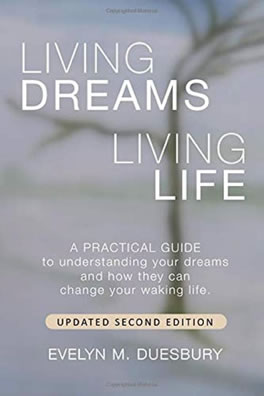
LIVING DREAMS, LIVING LIFE (Updated Second Edition)
This is an all encompassing book of dreams about relationships, spirituality, nightmares, and lucid dreaming. Research results are included.
The Personalized Method for Interpreting Dreams (PMID) is the primary model. Overviews of other models are incorporated.
Below are excerpts from Living Dreams, Living Life Web page https://livingdreams.life.
"Dreams are our personal guides to self exploration, discovery and understanding."
Since the beginning of history, civilizations have explored dreams to understand their meaning and messages. Centuries of discovery and learning from the world's greatest thinkers, religions and cultures.
Today, modern dream interpretation builds on this historical foundation, applying professional counseling, psychotherapy and personal coaching practices and techniques to give individuals practical and proven ways to personally understand their dreams, their lives, and the answers to live their own lives more fully. Living Dreams means learning from our dreams in ways that connect, inform and inspire our everyday lives.
"This is among the most user-friendly guides written to help us learn to better understand the meaning of our dreams. I am most impressed by how she speaks directly to us average individuals in a humble, yet deeply informed way. She is speaking directly, one-on-one and does not assume the posture of a lecturer or know-it-all." —Stanley Krippner, Ph.D.
"Through years of vigorous and committed research, Ms. Duesbury has developed a method she calls the Personalized Method for Interpreting Dreams (PMID). This focuses primarily on our individualized, personal dreams... those which constitute the majority of our dreams. Citing dozens of dreams, including her own, Ms. Duesbury demonstrates how working with this method has assisted many in gaining insight, healing and growth."
Book! Living Dreams, Living Life (Updated Second Edition)
Primary Markets: Practicing professional counselors and therapists.
Secondary Market: General public.
Buy this book from publisher Amazon. Available in Paperback or Kindle!

A Dream-Guided Meditation Model and the Personalized Method for Interpreting Dreams
Preface
Several years ago I discovered spirituality teachings that differed from my earlier religious teachings. At the time I was an associate professor of accounting, a career I appreciated so much I had no intention to leave. Then while grading CPA (Certified Public Accounting) exams in New York City, new-to-me spirituality teachings including meditation came to my attention. Nighttime dreams came to my attention and led me to a counselor education masters degree and to the subsequent development of the Dream-Guided Meditation Model.
The dreams that led to the development of the Dream-Guided Meditation Model are herein interpreted with use of the Personalized Method for Interpreting Dreams (PMID). The PMID is a product of my counselor education thesis research, a turn of the twenty-first-century model chosen thesis of the year 2000 by the University of Wisconsin-Whitewater. See Appendix A for the One Hundred Year Turn of the Twenty-First Century Coincidence that resulted in the PMID model.
My aspiration for this book is that it will be a meditation model that is useful in some ways to various people, whatever their gender, race, national origin, religion, or marital status.
Excerpts From the Introduction
I am one who believes that humans have direct access to Higher Self guidance that is beyond human understanding but is within our experiences. Experiences that convince me are deep meditations and nighttime dreams. Readers, as you study this book, I expect you may find meditations and nighttime dreams are interactive for you as well...
Now let us learn how nighttime dreams and meditations (inner work) flow together. That’s how it is for me. The dream Dream Work and Inner Work Flow Together shown next answered my previous day’s thought-question: “Could my dreams replace my meditations?”
Meditations and Dreams
DREAM: DREAM WORK AND INNER WORK FLOW TOGETHER
There are two drain spouts running along two roofs. I look and see where the spouts almost come together in the middle. One somehow dumps into the other drain spout. Words in my mind when I woke were: “This dream work and inner work are for me.”
PMID Step 1: Connect your previous day (often the day before) events to the dream to discover the theme of this dream.
Last night I read a writer-meditator’s account on how he knows he must meditate.PMID Step 2: Connect your previous day (often the day before) thoughts to your dream to detect which thoughts may have prompted this dream’s responses. Write “I thought” statements and record when you thought them. Last night, after I read the writer-meditator’s account on how he knows he must meditate, I thought about my meditations and how at times when my meditation success is low, I wonder if my dreams could replace meditations. So, a possible thought-question is: “Could my dreams replace my meditations?”
PMID Step 3: Select and define major words and phrases from your write-up of this dream to discover the dream’s personalized meanings. The general definition for “phrases” as used in this step is “a string of words,” which can be phrases, clauses, or whole sentences.
- Two drain spouts running along two roofs: The thoughts in my mind as I woke (“This dream work and inner work are for me.”) identify the two drain spouts as dreams (dream work) and meditations (inner work).
- Look and see where the spouts almost come together in the middle: Dreams and meditations almost come together.
- One somehow dumps into the other drain spout: Meditations and dreams appear in succession instead of one replacing the other.
The response to my pre-dreams thought-question of whether my dreams could replace my meditations is: “Dreams and meditations are interactive with each other; both are resourceful.”Now I repeat: “Readers, as you study this book you may find nighttime dreams and meditations are interactive for you.”
Synopsis of This Book
Sections A and B present detailed coverage of the Dream-Guided Meditation Model. In Section A, Chapter 1 presents the dream that brought the meditation model. Chapters 2, 3, and 4 present stages of the model as clarified and detailed by dreams subsequent to the dream that brought the model. Chapter 5 presents prospective results from use of the DreamGuided Meditation Model over time. In Section B, Chapters 6 and 7 present dreams about when and where to meditate. A conclusion and a summary of lessons presented in this book finish A Dream-Guided Meditation Model and the Personalized Method for Interpreting Dreams.
Selected sample from Summary of Lessons Presented in This Book
A compilation of the solutions and suggestions for each dream in this book is used to summarize the lessons presented. As you study these lessons may you find helpful ideas for your meditative life. ...
Lesson One: Dreams and meditations are interactive; both are resourceful. Dream: Dream Work and Inner Work Flow Together
Lesson Two: The three basic stages in the Dream-Guided Meditation Model are Quiet Your Body, Slow Your Breath, and Still Your Thoughts and Listen to Become Aware of Your Still State with the potential result over time of becoming aware of your Higher Self presence within your being, a presence in all human beings. Dream: A Meditation Model Given in a Dream
Lesson Four: When you wake during the night and feel restless, meditate; but meditate in extreme quiet. Dream: The Teacher Sits in Extreme Quiet for Meditation
Lesson Six: At least some of the time, even an instant, still your thoughts. Dream: The Monkey Mind
Lesson Seven: Calmly affirm that thoughts and emotions, especially negative thoughts and negative emotions, are shut out from interfering with your meditations and with your dreams. Usher the dominant thoughts and emotions out first. Dream: Usher the Dominant Woman and the Others out of the Church
Lesson Eight: Be patient as you wait for your thoughts to clear for deep meditation. Dream: Responses from Becoming Especially Aware of the Difficulty to Still the Thoughts That Cross the Mind
Lesson Ten: Recognize effects when you let your thoughts pass by, much like waiting for a train to pass by at a crossing. Dream: Stand Still and Let the Train of Thoughts Pass By
Lesson Eleven: Attempts to meditate without having practiced and without listening is like expecting to play beautiful music when you haven’t practiced. Dream: Listening and Practice Are Essential for Successful Meditation
Lesson Twelve: For times when it seems you are meditating more on an outer level instead of an inward level, return to studying the Dream-Guided Meditation Model. Dream: Reminded to Meditate with the Full Dream-Guided Meditation Model
Lesson Fourteen: Stay with the meditation process and wait patiently! Patient waiting is paramount for successful meditation. Dream: Stay in the Meditative State and Wait Patiently!
Lesson Fifteen: Keep from becoming drawn into frustrated emotions and a measure of successful meditation will occur. Dream: Confidence That Yesterday’s Second Meditation Was Deep Though Could Have Been Deeper
Lesson Sixteen: During your busiest days it is especially important to take time for meditation to calm yourself. This dream counsels me that meditation would have been symbolically worth $1,000 in calm wisdom for completing my yesterday’s work. Dream: Take Time for Meditation: It Is Worth $1,000 in Calm Wisdom
Lesson Thirty-Two: Keep inspired by realizing the ever-present still state. Dream: There Is No Place Where the Music Professor Is Not
Lesson Thirty-Four: It is possible to picture yourself in meditation in an inspiring leader’s congregation even when the leader teaches in a foreign country. Dream: Can Picture Myself in a Foreign Country Church and Meditate There
Lesson Thirty-Five: Waking-life responses to meditation can be confirmed by subsequent dreams, and added wisdom can be included in the subsequent dreams. Dream: Response to Meditation—Unexplainably Felt Enormously Uplifted; Knew There Is Infinite Mind—Beyond All Tangible Things
The Counselor’s Guide for Facilitating the Interpretation of Dreams: Family and Other Relationship Systems Perspectives, Routledge, November 2010.
by Evelyn M. Duesbury, NCC, DCC, LPC

This book will serve as a guide for practicing counselors and therapists to facilitate work with their clients interpreting their dreams in order to reduce and alleviate stress, with a focus on dreams concerning family members and other major figures in the dreamer's life with whom he or she interacts. Providing a framework for what follows, a brief historical and cultural background on the uses of dreams is presented, along with an overview of the major dream theories and therapies and the clinicians who developed them. The majority of the book then explores in-depth a researched dream interpretation model developed by the author, the Personalized Method for Interpreting Dreams (PMID). Through the use of a detailed case example of a client and her dreams, the author shows the clinician how each step of the PMID can be applied and carried out in their sessions with clients. Chapters conclude with self-study questions, and one is organized such that it can be used as the basis for a three-hour class on dream interpretation. (https://www.routledge.com/products/9780415883429)

Excerpts from The Counselor’s Guide for Facilitating the Interpretation of Dreams: Family and Other Relationship Systems Perspectives
From Chapter 11: Review Dreams for New Insights: It May Be Time to Move Onward
Dream: My very young son and I are here in a place that looks at first like our house, but then later it is Paul’s mom’s house. At first I see only a little dirt on the floor. When the dirt increases, I start to use the sweeper, but a sock-like thing on the end has come unstitched. I decide to let my little boy do the sweeping. I’ll go stitch this sock-like thing up right away.
My little boy pulls the sweeper canister by the cord. I was afraid of that! I scold him, “Do not pull the sweeper by the cord!”
Paul’s mom is taking up Paul’s time. That peeves me. Paul’s hair is very curly. I bet his mom put a permanent in his hair. But, gee whiz, why would he let her? He even has pigtails. Somehow, I know for sure that the curls and the pigtails are only temporary.
I go out in back of the house to pull some weeds near a pretty little creek along the house. Paul’s mom is standing in the doorway. I pull up a couple of plants I think are weeds. My goodness! I see they really are flowers. I am surprised! I gingerly pull on a couple more plants. More flowers come up. But I’m worried with Paul’s mom standing here. I don’t want to damage anything. Thus, I don’t pull up the plants anymore.
This is really quite a lovely place. Yet in spite of that, Paul’s Mom’s presence irritates me. I know she wants things just a certain way. It surprises me, though, that I'm irritated.
PMID Step 1: Connect your previous-day (often the day before) events to the dream to discover the theme of this dream. The events may appear in either symbolic or literal terms in your dream. Write down the appropriate events and record when they occurred.
I was surprised to feel irritated at Paul when he came to bed last night. No reason. Yesterday I told Paul I had never been upset at my child in a dream. Then, last night in this dream, I became upset at my child.
PMID Step 2: Connect your previous-day (often the day before) thoughts to your dream to detect which thoughts may have prompted this dream’s responses. Like events, your thoughts may appear in your dream in either literal or symbolic terms. Write “I thought” statements and record when you thought them.
Last night I wondered where in the heck my irritation at Paul came from.
PMID Step 3: Select and define major dream phrases and symbols from your write-up of this dream to discover the dream’s personalized meanings. Consider effects of your events and thoughts of the day before your dream and earlier experiences on the meaning of each major dream phrase and symbol. The general definition for phrases as used in this step is “a string of words.” The strings of words can be phrases, clauses, or whole sentences.
- My mother-in-law’s house: Could be unwitting feelings about something Paul did yesterday that unconsciously reminded me of the way his mother did things.
- Increasingly seeing more dirt: In the background of this dream, the more I think negatively about something, the more negative it seems. Could be talking about (gee, I don’t like admitting this) how I got to thinking about Paul’s mother at times.
- Stitch the sock-like end up right away: Here, I act a lot like my mother-in-law. I used to marvel that she’d mend things on the spot. She never let it stack up the way I do. As they say, “A stitch in time . . .”
- Scold my little boy for pulling the sweeper by the cord: A fussy concern for me. Reminds me of my mother-in-law’s fussing ways. Yet that is about the way I act when I scold my little boy for pulling the sweeper by the cord in my dream.
- My child: Maybe the child is here to show me if my child can irritate me for something seemingly minor, when that has never happened in a dream before, my mom-in-law could be more irritated at me for something that seemed minor but was actually high priority for her.
- Paul’s mom has been away: Paul’s mom died a couple of years ago.
- Paul’s mom occupies his time: That comes from my jealousy that she took so much of Paul’s attention at times.
- Hair: Hair is the usual symbol for thoughts coming out of the head.
- Paul’s mom having put curls in Paul’s hair: The way she influenced Paul’s thoughts. At least this is how I saw it.
- Curls are not permanent: The hair work, this “thought influence” isn’t a permanent influence on Paul. He is his own self.
- Pull out a couple plants I think are weeds: In the background of this dream, weeds mean something I need get rid of, un-flowerlike thoughts about my mother-in-law. I imitate her here again. She was so fastidious that when we walked around our garden, she pulled any weeds she saw. I took it as an insult.
- Really are flowers: This is going over into problem-solving, Step 5, but it’s good here in Step 3, too. When I pull weed-like thoughts, flowering thoughts appear.
- Concerns with Paul’s mom being near while I work in the flower beds: Really brings a strong memory. I never wanted to make any mistakes in front of her.
- Know she wants things just a certain way: My mother-in-law’s exacting disposition.
- Is really quite a lovely place: Reminds me that Paul’s mom’s place in my life was really quite a lovely place. Deep down, I know that is right!
PMID Step 4:Compare your emotions in your dream with your pre-dream, waking-life emotions to discover whether your waking-life emotions accurately reflect how you feel about the issue in this dream. Note that the issue may be a relationship issue. What differences, if any, do you find between your emotions in your dream and your waking-life emotions? It is useful to periodically review your emotions in your dreams regarding the main issue or relationship at hand.
In the dream, I feel angry with my little boy for pulling the sweeper by the cord, flowers popping up surprise me, I’m worried I’ll damage the plants in front of Paul’s mom, I feel irritated from her standing here, and I’m surprised that I’m irritated. In waking life, last night I was surprised to feel irritated at Paul when he came to bed.
PMID Step 5: Explore your dream for possible solutions to problems, including changing (or affirming) your thoughts, attitudes, or behaviors. Consider your responses to each PMID model step, including Step 6, as you search for solutions and suggestions in this dream. Give primary attention to the power of your thoughts before your dream (PMID Step 2) to act as questions that your dream answers.
Pull the negative thoughts about Paul’s mother out of my mind right now, just like Paul’s mom did with her mending. She did it right away.
PMID Step 6: Explore your dream for family and other relationship systems perspectives, which are influences arising from reactions to family and other major relationships, both past and current. Use these perspectives to discover whether this dream reflects your reactions during experiences with family members or other important people in your life. Compare and comment on your dreaming and your waking-life reactions to the primary relationships in this dream. (If this dream is not about a relationship, type the words “Not Applicable” in this space.)
The primary relationship, I guess, is my mother-in-law. In the dream, I stop pulling weeds when she watches me. In waking life, when I was afraid of what she would say, I usually tried to keep from letting her know what I was doing. On how I treated Paul when I felt irritated at him the night before this dream, I didn’t write that down and I don’t remember now what I did. But when I react to Paul as a result of something that happened between his mom and me (as I believe my dream shows) that is way, way off-base, and very unfair to Paul! When I am able to pull negative thoughts from my mind (weeds from the flower bed) about Paul’s mother, then I’ll be far more apt to react to Paul based on our relationship, instead of partially based on my unresolved reactions to my mother-in-law.
Incidentally, later the dreamer reported that she had additional dreams about her mother–in-law. In the last dream she shared for this book, her mother-in-law’s name was changed from her given name to Eunice. The dreamer reported,
Eunice means “Gloriously victorious.” My dream shows that I have become “gloriously victorious” in overcoming negative thoughts and emotions about Paul’s mom. Paul is in that dream, also. The night before the dream, while sitting beside Paul I looked at him and thought, “I wonder how he looks and seems to others.” I wondered if they see him differently than the very solid, intelligent, and wise upper level person that I see. A capsule of that dream is presented in chapter 7, Table 8, titled “Examples of Emotions in Dreams Compared with and Waking Life Emotions (Step 4).”
From the Introduction to Section I, Preliminaries of Dream Interpretation
Research shows that all people dream, so it is obvious that all reports of recalled dreams must originate from the dreamer. What is the dreamer to learn from his or her personal communication that is the dream? Let us begin by learning what dreams are.
Dreams are nighttime counselors. Although this definition fits with the context of this book, the idea of dreams as nighttime counselors may seem strange to people who have yet to use their dreams for problem solving. A straightforward definition of dream is “a series of thoughts, images, or emotions occurring during sleep” ( Merriam-Webster’s OnLine ).
Dreams that reflect problem solving and connect to our reactions to experiences with people in our lives are relationship dreams. Relationship dreams are the focus of this book. A great percentage of the images, thoughts, and emotions that pass through our minds while we are sleeping are about the people we have talked with, listened to, or thought about during the day before we go to sleep and dream. Those dreams may be about our reactions, both pleasant and unpleasant, to people from our past. Counselors find that a large percentage of people who come to us come for help in alleviating the stress from their reactions to major relation- ships in their lives.
From the Introduction to Chapter 1, Historical and Cultural Uses of Dreams
The dream is a major self-discovery resource for everyone, everywhere, in whatever culture. Further, dream scenarios are exclusive to the individual dreamer. Moreover, dream contents reach beyond cognitive awareness. Cognitive behavior therapies concentrate on events, thoughts, and emotions. Dreams connect to events, thoughts, and emotions. The strengths of cognitive behavior therapies and the strengths of the facilitation of clients’ dream interpretations can be combined.
Summary of Chapter 2, Preliminaries to Working With Dreams
The purpose of this chapter, which presents elementary instructions for working with dreams, is to ensure that all readers are prepared for the work of this book. Topics covered are the dreaming of children, adolescents, and adults. The best help a parent can give his or her child is to be present when the child awakens from dreams and to patiently listen to the child, to value the child’s dreams, and to become aware of the child’s reactions and feelings and any waking-life activities that may have prompted the dreams. Sharing dreams with parents, teachers, and counselors may be the only way (or only one of a few ways) an adolescent can find relief from the stress of teenage transitions. Adults can learn to recall and record their dreams as they embark on a course of dream interpretation. The chapter concludes with anecdotes that tell how clients’ and counselors’ dreams can be helpful to the counselors’ work with clients.
From the Introduction to Section II Personalized Method for Interpreting Dreams (PMID)
In a few years, after you have interpreted many of your dreams, who will you be then?
Tonight, after you have interpreted this morning’s dream, who will you be then?
Not only has my own use of the Personalized Method for Interpreting Dreams (PMID) model helped me far beyond my greatest expectations, but also, as shown throughout this book, when others have used the PMID model, it has benefited them beyond their expectations. In addition to using the model to alleviate stress arising from relationship issues, we use it to find guidance in most circumstances of our waking lives.
Will the PMID model work for you? Will it work for each person who comes to you for counseling? Only you and your clients as individuals can answer that question. To expand your horizons on the value of dream guidance, I summarize several other dream models (Section 1) and explain and demonstrate two other dream interpretation models (Section 3).
A unique feature of the PMID model is its attention to influences arising from reactions to family and other major relationships in relationship experiences. The systems approach to dream interpretation considers influences, both past and current, arising from our reactions to other people. That is, each member of a family (or other major group) affects and is affected by others to the extent it makes no sense to attempt to understand the individual in isolation. With the PMID model, the dreamer, either facilitated by a counselor or working alone, studies his or her dreams about major relationships instead of meeting with others in the system of relationships to discuss concerns.
Another unique feature in the PMID model is that the dreamer himself or herself selects major phrases from the dream and defines them in the context of the dream. The general definition for phrases as used here is “a string of words.” Strings of words can be phrases, clauses, or whole sentences. The dreamer’s ability to define dream phrases from personal experiences is a significant key to finding meanings in the dream. A combination of intuitive insights and logical reasoning is often needed to develop these meanings.
Each step in the PMID model builds on previous steps. That is, ability to do each step blends with performing the succeeding steps.
From Chapter 3, Overview of the Personalized Method for Interpreting Dreams by Kimberly Tuescher, Brenda O’Beirne, and Evelyn Duesbury
This chapter serves two purposes:
1. It is an overview of the Personalized Method for Interpreting Dreams (PMID) for practicing counselors who use this book for learning how to facilitate clients’ interpretation of their dreams.
2. It is a one-class period, 3-hour presentation to introduce the PMID model to students in graduate-level counselor education courses that are other than dream interpretation courses.
From the Introduction to Chapter 4, Daytime Events Reproduced in the Nighttime Theater of Dreams
What happened yesterday or last night anywhere in the world is headlined in the morning newspapers. What happened yesterday or last evening to the individual is often headlined in morning dream recall, depending on its significance to the dreamer. A newspaper headline states the theme of the article below it. Themes can also be identified for dreams.
Why is it important to identify the theme of a dream? This is true for the same reason it is helpful to read newspaper headlines—to find out what the dream is about. Determining the theme is the purpose of the first step in the Personalized Method for Interpreting Dreams (PMID) model.
The counselor needs to learn how to use the PMID model with his or her own dreams before he or she is ready to facilitate clients’ use of the model.
From the Introduction to Chapter 5, Daytime Thoughts: Questions that Nighttime Dreams Answer
Thoughts are powerful antecedents to our dreams. They frequently serve as questions that the dream answers in some way. In the Chapter 4, we saw that our ability to connect pre-dream (often day-before-our-dream) events to the dream can reveal the theme of a dream. In this chapter, we can use Personalized Method for Interpreting Dreams (PMID) Step 2 to learn if a dream responds to any of our day-before-our-dream thoughts.
Caution: Be aware that events and thoughts are not the same thing. Address them separately when you begin to interpret your dream. When participants in our research and exploration projects recorded and considered events and thoughts separately, they often succeeded in finding the best personal meanings in their dreams.
Events are, however, few in comparison to the multitude of thoughts we think every day. Can you really determine which of your random thoughts connect to your current dream? Yes, you can, and your success will amaze you. But, be aware that this work takes dedication. A major reason it takes dedication is that dreams are more often symbolic or metaphoric than literal.
From the Introduction to Chapter 6, Dream Phrases: Products of the Amazing Creative of the Dreaming Mind
The ability to develop personalized meanings for dream phrases can enable people to find joy in dream guidance, perhaps for the first time in their lives. The Personalized Method for Interpreting Dreams (PMID) Step 3, which is defining a string of words, is unique to interpreting dreams. The technique is straightforward. Select major groups of words from your recorded dream narrative and define them in the context of the current dream. Selecting dream phrases is an evaluation made by the dreamer regarding which dream phrases are the most personally meaningful. The dreamer’s spontaneous feelings are the best gauges for knowing the relative accuracy of meanings he or she has developed.
Although the technique is straightforward, our ability to become at ease with developing personal definitions takes dedication and time. Dreams often include images and use figurative language; further, there are no boundaries between the dreamer’s past and current experiences. The incorporation of the dreamer’s experiences in the dream confirms that each dreamer has a uniquely personal dreaming language. When the dreamer becomes acquainted with his or her own dreaming language, meanings will become accessible. Dedication to discovering one’s individual dream language will result in rich rewards of discovering dream guidance.
From the Introduction to Chapter 7, Emotions in Dreams: Intrinsially Honest
The dreaming mind exaggerates. A major area of dreaming exaggeration is emotions. Emotions in dreams are, however, intrinsically honest, even while being exaggerated. This honesty is noteworthy because it means that dreams can tell us when our waking-life appraisals of emotions are inaccurate. Consider how helpful the emotional content in a client’s dreams can be in the counseling process. Besides assessing accuracy, comparisons over time about a particular issue or relationship help trace a client’s progress in alleviating stress.
From the Introduction to Chapter 8, Solutions and Suggestions in Dreams: Answers to the Dreamer’s Waking-Life Issues
A major outcome assessment in family counseling and cognitive behavior therapies is problem solving. A major outcome from the use of the Personalized Method for Interpreting Dreams (PMID) model is the dreamer’s ability to discover problem-solving suggestions.
This method (the PMID model)] is especially helpful in identifying, clarifying, and resolving relationship problems. During our waking hours, we often feel frustrated that our rational attempts to solve life challenges are unsuccessful. It is then that our dreams often provide innovative and unexpected answers (S. Krippner, personal communication, March 2, 2001).
Unexpected answers found in dreams are often couched in symbolic language. The dreamer needs to interpret this symbolic language to understand the answers. . . . The counselor-facilitator encourages the dreamer to put together all the responses from the other PMID steps (including Step 6) and study the results before deciding which answers, solutions, and suggestions are embedded in the dream.
Note that Steps 1 through 5 are useful for interpreting most kinds of dreams, including dreams about work, education, health, and the spiritual realm.
From the Introduction to Chapter 9, Interpretation of Dreams From Family and Other Relationship Systems Perspectives: Further Clues to Relieving Stress
The Personalized Method for Interpreting Dreams (PMID) model uses family and other relationship systems perspectives to interpret dreams. The family systems perspective as it relates to counseling is defined as influences arising from reactions to family and other major relationships, past and current. As used in PMID Step 6, the term family and other relationship systems perspectives means dreamers study their dreams about influences arising from reactions to family and other major relationships, past and current, to discover whether their reactions in the dream connect to past circumstances or whether their reactions originate from present circumstances only.
Allen (1994) developed the family systems approach to individual psychotherapy (currently renamed unified therapy), which is based on Bowen theory (1978). As the original name implies, Allen’s approach is the integration of individual counseling techniques with family counseling techniques to resolve family problems. With Allen’s approach, the therapist usually meets with only one family member. Changes in one person’s reactions compel other family members to act differently because the system has changed.
With the PMID model, the dreamer, counselor facilitated or alone, studies his or her dreams about family and other major relationships instead of meeting with others in the system of relationships to discuss concerns. This feature avoids blaming. It is not a matter of who is at fault; it is a matter of changing the person the dreamer can most easily change—the dreamer. Dreams guide the process of change. When the individual can change his or her thoughts, attitudes (emotions), or behaviors, the system of relationships must adjust to accommodate that one person’s change (Bowen, 1978; Kerr & Bowen, 1988).
From the Introduction to Chapter 10, Dreams Build on Each Other: The Individual’s Series Approach to Interpreting Dreams
Using the “individual’s series approach to interpreting dreams,” the dreamer learns about his or her reactions to one or more relationships or issues by studying a series of dreams about each relationship or issue.
In this chapter, Gloria and her counselor will more deeply examine the concept of studying a series of dreams. In the process, they will look for answers to two questions that came up during the Personalized Method for Interpreting Dreams (PMID) work with Gloria’s “When Did I Lose Control?” dream: (1) Do Gloria’s other dreams contain suggestions for how Gloria can more easily achieve the solution she found in her “When Did I Lose Control?” dream, and (2) does Gloria have dreams that support the results of her quantitative personality tests?
From the Introduction to Chapter 11, Review Dreams for New Insights: It May Be Time to Move Onward
Serious dream workers repeatedly review their significant dreams and associated interpretations until the specific messages of the dreams are clear—or until they reach an impasse on one dream and go on to the next. Revisiting dreams and reviewing earlier interpretations to refresh former meanings, discover new insights, and review for misinterpretations are critical to our best use of our dreams. All dreamers who contributed their dreams and interpretations to this book had reviewed their interpretations at least once before offering them to me.
When people neglect to revisit their dreams and interpretations, at least the major ones, it seems analogous to counselors keeping running records of their work with clients and then never referring to those records again. Reviewing past dreams and interpretations for new insights reduces the need for the dreaming mind to repeat a message in future dreams. Repetitions of messages are marvelous, though, when the dreamer needs them. One instance of need for a repeated message is when the dreamer misinterprets the original message. Dreams provide light on other dreams. Be alert for later dreams that reveal your misinterpretations.
From Chapter 12, Delivery Modes for Facilitating Dream Interpretation: How They Accommodate Short-Term Counseling
Distance Counseling and the Personalized Method for Interpreting Dreams Model
The Center for Credentialing and Education (CCE) defines distance counseling: “Distance Counseling . . . may include . . . stand-alone software programs.”
ACA Code of Ethics Standard H: governs distance counseling.
Our research and exploration projects have all been via a privately owned stand-alone Website.
Face-to-Face Counseling and the PMID Model
Although all the benefits of using the PMID model presented in this book are applicable to face-to-face counseling, there are unique differences in application between face-to-face counseling and distance counseling when using the PMID model. . . . typically 50-minute sessions. [A] time gap can be created for face-to-face settings . . . the client can record his or her dreams and develop at least some meanings between counseling sessions. Use of what a client writes between sessions thus yields many of the same benefits as distance counseling.
From the Introduction to Section III, Two Breakthrough Dream Interpretation Models of the Later 20th Century
My invitations to Ullman and Cartwright and Lamberg came from a dream. In fact, this whole book was inspired by a dream. One night, I commented to a colleague, “When I finish updating my dream interpretation course book [an unpublished series of lessons on my Personalized Method for Interpreting Dreams (PMID) model that I wrote for a university course I taught], I am going to devote my time to my own dreams.” That very night my accounting advisor (who once told me, “I did all these various jobs to get to where I am now”) came to me in a dream. “The university is going to put in completely new systems, computer systems,” he told me, “and you are one targeted to be the administrator.”
In retrospect, I believe what my advisor meant in that dream was to completely rewrite my course book with its emphasis on the systems approach of the PMID to dream interpretation. However, when I first interpreted that dream, I thought that the word systems meant several dream interpretation models. Thus, I invited other contemporary dream interpretation model developers to present their models in the “completely new book.”
After Montague Ullman and Rosalind Cartwright, with her coauthor Lynne Lamberg, had signed their consents, I had another dream that showed my willingness to move to another house (to present other people’s models). Yet, I really wanted to stay in the house I love. In waking-life, my husband and I live in a house that I love; in dream symbolism, I understood the new dream to say, “Stay with the PMID model as the primary focus in the book. That is the house you love and the model you know best how to teach.”
Notice that my dreaming mind waited to present this second dream until after Ullman, Cartwright, and Lamberg had signed consents to present chapters in this book. It is my great honor to include their volunteered, formerly published writings.
From the Introduction to Chapter 13, Group Approach by Montague Ullman
Montague Ullman (1916 to June 07, 2008), clinical professor emeritus, was “in the forefront of the movement to stimulate public interest in dreams and to encourage the development of dream sharing groups. Working with a small group process that he felt was both safe and effective he has spent ... three decades leading such groups both here and abroad, especially in Sweden.” (Siivola, par. 3, retrieved, February 1, 2010). Ullman’s literature and research support of elements contained in the Personalized Method for Interpreting Dreams (PMID) model are referenced in other chapters of the current book. Except for this introduction and the self-study quiz, this chapter is a quotation from an article written by Ullman and published in 2001.
From the Introduction to Chapter 14, Cartwright’s Risc Mode, by Rosalind Cartwright and Lynne Lamberg
Rosalind Cartwright is a professor in the Department of Behavioral Sciences at Rush University Medical Center in Chicago, where she opened the first Sleep Disorder Service in the Midwest in 1978. She has been conducting studies of dreaming for over 45 years and has published four books: Night Life (1977), A Primer on Sleep and Dreams (1978), The Twenty-four Hour Mind (2010), and with Lynne Lamberg, Crises Dreaming (1992/2000). Cartwright was given the Distinguished Scientist award by the Sleep Research Society in 2004. (Cartwright’s literature and research support of elements contained in the Personalized Method for Interpreting Dreams [PMID] model are referenced in other chapters of the current book.) Lynne Lamberg is an award-winning medical journalist who specializes in mental health. She is the author or coauthor of six books, including The Body Clock Guide to Better Health (2001) with Smolensky.
From the Introduction to Section IV, Conclusions
The primary aim of The Counselor’s Guide for Facilitating the Interpretation of Dreams: Family and Other Relationship Systems Perspectives is to fill a gap that exists between current academic training for American Counseling Association (ACA) practitioners and the practitioners’ needs for focused training on how to better facilitate their clients’ dream interpretations.
The main theme concerns dreams about relationships, primarily dreams about family members and other major figures in the dreamer’s life with whom the dreamer interacts and reacts.
The primary objectives of the book are thus to explain and demonstrate ways for counselors to assist clients who want to understand and interpret their dreams. The featured dream interpretation model, the Personalized Method for Interpreting Dreams (PMID), integrates well with contemporary psychotherapies, especially cognitive behavior therapies.
This final section contains a chapter [Chapter 15] that highlights the main teachings presented to meet the aim, theme, and primary objectives of this book.
Writers' Guiding Dreams, Caliope editorial, March 2018
by Evelyn M. Duesbury, ACA and APA member

Buy this book from publisher http://www.editorialcaliope.com/en/producto/writers-guiding-dreams/
As writers, our craft is more than what we do. Writing is who we are, how
we see the world and it even shapes our dreams in profound ways.
Writers' Guiding Dreams helps writers open themselves to understanding and using their nightly dreams to discover, explore and inspire their passions and work.
Summary of the Lessons Presented in This Book
The primary purpose of Writers' Guiding Dreams is to encourage writers to use their nighttime dreams to guide their writings. First, study this book and then practice, practice, practice with a trustworthy model before attempting to use your dreams to guide your writings.
Primary teachings in this book about how to use guiding dreams to direct your writings are: Pay attention to grammar; poor grammar overshadows good content. For understanding your writer's guiding dreams, write the dream down, patiently tie pre- dream events and thoughts to your dream, develop meanings from those connections and from earlier personal experiences, look to more than one dream for significant decisions, and listen for intuitive insights. Resist rushing to use the first meanings you develop. For major dreams, review your original meanings weeks, months, and even years after you first interpret the dream. Review major dreams for whether the original interpretations are accurate.
To write well, realize that listening for intuitive insights is similar to listening to spontaneous music and similar to a computer that automatically starts, go into the same kind of calmness as when becoming very at ease with no rush or pressure during meditations, take breaks from intensive mental concentration to listen for creative insights, resist pushing just to complete the final edits, and, stay relaxed and jolly, however busy you are.
It can take days, weeks, months and years to understand pivotal guiding dreams completely as demonstrated by the dream "Targeted to Write a Universal Systems Book." Continued diligent work and review eventually brought correcting dreams and the publication of The Counselor's Guide for Facilitating the Interpretation of Dreams: Family and Other Relationship Systems Perspectives (Duesbury, Routledge, 2010).
Expect guiding dreams, notice them, and dreams will come more predominantly. Book topics vary according to the writer-dreamer's waking-life experiences. Responses to pre-dream thought questions come in various symbolized scenarios; one scenario is earlier life events that connect to current circumstances. Quite often the dreamer can define most phrases, ("phrases" as used in this step is "a string of words." The strings of words can be phrases, clauses, or whole sentences) by connecting the strings of words to day-before-the-dream events, day-before-the-dream thoughts, and earlier experiences.
Dreams guide manuscript arrangement, chapter revisions and updates, book title, highlights, markets, number of words, technical term explanations, reference list omissions and corrections, plus book cover designs and inscriptions. Dreams often focus on what needs to be changed instead of focusing on what is fine as it is.
Symbolic scenarios -- though at times are difficult to understand -- help writers make editing decisions, including book cover design and inscription. Unhurried work on major edits contributes to enjoying the process. Dreams about relationships and unrelieved psychological stressors can provide material for book manuscripts (Roderick Mackenzie). Dreams can suggest writing a book about the writer-dreamer's waking life profession (Janice Baylis). And dreams can be sources of a writer's to-do list (Ann Hollier).
Precognitive dreams may be so surprising that the dreamer-writer understands them only after the event has occurred: Two 2007 dreams foretold the birth of Writers' Guiding Dreams. A dream can remind the author that her book is a resource for all writers. Writers' Guiding Dreams is a resource for all writers.
Excerpt from Some Everyday Dreams, How I Use Them, unpublished manuscript
Note: For dreams other than relationship dreams, PMID Step 6 (relationship systems perspectives) is omitted.
DREAMS ABOUT BEING A STUDENT
Dream Title: Bad Breath
It is dusky in the room. I am reading the second part of a presentation aloud. I read the first part fine, but now I am having difficulty reading the writing squeezed in around the typed material in this second part.
The person who wrote the second part is hovering over my left shoulder, watching me struggle with the reading. I feel quite pressured to read this correctly. There is an audience, but they are few, and really are not major characters in the dream.
Suddenly the person at my shoulder tells me my breath is so bad he cannot stand to be near me. So I give the piece to him to read, not in anger but just to solve the problem because he is the author of the piece.
PMID Step 1: Connect your previous-day (often the day before) events to the dream to discover the theme of this dream. The events may appear in either symbolic or literal terms in your dream. Write down the appropriate events and record when they occurred.
I am enrolled in a continuing education class. Yesterday I wrote a speech about imagination to be given in today's class. I wrote at first from my own heart, but when I read the completed talk to myself, the second part seemed dull. So I adopted a plan suggested by a friend. I found a prepared visualization to use for the second part and added my handwritten notes in the margins of the typed visualization.
The visualization I found, which was about butterflies in a garden, seemed to be a good fit. Some of my classmates had expressed their love for gardens, so I chose the butterflies and called the visualization “You Can Fly.” I also composed a good ending. I felt that the talk was perfect.
The theme of this dream is “my planned talk.”
PMID Step 2: Connect your previous-day (often the day before) thoughts to your dream to detect which thoughts may have prompted this dream’s responses. Like events, your thoughts may appear in your dream in either literal or symbolic terms. Write “I thought” statements and record when you thought them.
Yesterday, however, I thought about how there would be a substitute teacher, and I knew he disapproved of using meditations and visualizations in short talks. Nevertheless, I also recalled that a classmate had said we should not be concerned about using material when it is particularly appropriate. So I decided that my talk with the visualization was okay. A possible thought question is, “Is my talk truly okay?”
PMID Step 3: Select and define major dream phrases and symbols from your write-up of this dream to discover the dream’s personalized meanings. Consider effects of your events and thoughts of the day before your dream and earlier experiences on the meaning of each major dream phrase and symbol. The general definition for phrases as used in this step is “a string of words.” The strings of words can be phrases, clauses, or whole sentences.
- Dusky in the room: There is something in my dream that I do not see, do not understand.
- Having difficulty reading the writing squeezed in around the typed material: My handwritten notes of explanation were squeezed around the typed visualization.
- Person who wrote the second part is hovering over my left shoulder: Represents the author of the visualization. He was making it plain that I was doing a very poor job of presenting his material.
- Not many people: Symbolizes the class where I will present my talk. It is a small class.
- My breath is so bad he cannot stand to be near me: A bad talk. I think of the breath coming through my throat as the source of my voice. Bad breath in the dream therefore means a “bad talk.”
Notably, when I woke from the dream, I did have a bitter taste in my mouth. At first I thought my dream merely arose from having this bitter taste in my mouth. Fortunately, I decided to look closer at my dream.
PMID Step 4: Compare your emotions in your dream with your pre-dream, waking-life emotions to discover whether your waking-life emotions accurately reflect how you feel about the issue in this dream. Note that the issue may be a relationship issue. What differences, if any, do you find between your emotions in your dream and your waking-life emotions? It is useful to periodically review your emotions in your dreams regarding the main issue or relationship at hand.
In my dream, I feel quite pressured to read the writing correctly. Yesterday, though I was willing to use the visualization, I did not feel that it truly fit me. My emotions in my dream are thus somewhat similar to my pre-dream waking-life apprehension about my talk.
PMID Step 5: Explore your dream for possible solutions to problems, including changing (or affirming) your thoughts, attitudes, or behaviors. Consider your responses to each PMID model step, including Step 6, as you search for solutions and suggestions in this dream. Give primary attention to the power of your thoughts before your dream (PMID Step 2) to act as questions that your dream answers.
My dream counters my waking-life decision that the visualization would be okay for the class presentation. In my dream, I give the piece to him to read, not in anger but just to solve the problem because he is the author of the piece. This means I need to give the visualization back to its author and use my own material. Using the visualization in my talk is actually a bad idea.
How I Used My dream:I replaced the visualization with the material I wrote from my heart. When we arrived in the classroom, our substitute teacher told us our talks would be held to exactly four minutes. (Our regular teacher was lenient in timing.) The visualization would have taken my talk well over four minutes. Further, one of my classmates did a meditation and the substitute teacher stopped him in the middle of it when the four minutes were up, which ruined its effect. I felt compassion for my classmate and thought how I had narrowly missed being reprimanded as well. Well, I was reprimanded, but it was in the privacy of my dream.
Dream Title: Betty Works All the Problems
A colleague is saying that Betty isn't doing very well on some schoolwork. “But she works every problem,” I reply. “I know she works every problem at the end of each chapter.”
The other teacher and I agree about how Betty is good at these math problems. However, Betty only works the problems; she does not understand the concepts. Now I think about how problem working is only part of knowing the material.
PMID Step 1: Connect your previous-day (often the day before) events to the dream to discover the theme of this dream. The events may appear in either symbolic or literal terms in your dream. Write down the appropriate events and record when they occurred.
Yesterday I was studying for an upcoming statistics test. The theme of this dream is “studying for my upcoming statistics test.”
PMID Step 2: Connect your previous-day (often the day before) thoughts to your dream to detect which thoughts may have prompted this dream’s responses. Like events, your thoughts may appear in your dream in either literal or symbolic terms. Write “I thought” statements and record when you thought them.
Last night I decided to spend all of today working the problems at the ends the chapters. A likely thought question that this dream answers is “Is working problems the most beneficial way to study for my statistics test?”
PMID Step 3: Select and define major dream phrases and symbols from your write-up of this dream to discover the dream’s personalized meanings. Consider effects of your events and thoughts of the day before your dream and earlier experiences on the meaning of each major dream phrase and symbol. The general definition for phrases as used in this step is “a string of words.” The strings of words can be phrases, clauses, or whole sentences.
- Betty: A former accounting student of mine.
- Betty isn't doing very well on some schoolwork: In the context of this dream is the forecast that I won’t do very well on my statistics tests if I continue my plans to focus only on problem-working. Working problems was Betty’s specialty.
- Know she works every problem at the end of the chapters: What I planned to do in studying for my upcoming statistics test.
- Think how Betty is good at these math things: Betty excelled in mathematical computations when she was a student in one of the accounting courses.
- Does not understand the concepts: Betty would have done better in my class if she had had greater comprehension of the concepts that supported the mathematical problems.
- Other teacher: Represents something that my dream is teaching me that I didn’t realize in waking life.
PMID Step 4: Compare your emotions in your dream with your pre-dream, waking-life emotions to discover whether your waking-life emotions accurately reflect how you feel about the issue in this dream. Note that the issue may be a relationship issue. What differences, if any, do you find between your emotions in your dream and your waking-life emotions? It is useful to periodically review your emotions in your dreams regarding the main issue or relationship at hand.
My defense of Betty working every problem in my dream implies that I am surprised to learn that Betty isn't doing very well on some schoolwork. In the context of this dream, I am surprised that problem working won’t help me do well on my own upcoming test. Last night I felt pleased with my plan to work problems as the way to study for the test.
PMID Step 5: Explore your dream for possible solutions to problems, including changing (or affirming) your thoughts, attitudes, or behaviors. Consider your responses to each PMID model step, including Step 6, as you search for solutions and suggestions in this dream. Give primary attention to the power of your thoughts before your dream (PMID Step 2) to act as questions that your dream answers.
In my dream, I think about how problem working is only part of knowing the material. The other part of the material is understanding the underlying concepts. Like Betty, I need more work on the concepts that support the problems.
How I Used My Dream: This is an excellent helping dream. Because of the dream, I studied my concept-related notes instead of simply working more computational problems. The test was very concepts-oriented. My change in study strategy saved my A in statistics.Dream Title: There is Ambiguity on Page 10
Dr. Gaylon is here and is going to take my paper and present it to a large assembly of people, perhaps including professors. He hasn't read my paper before, however, and I wonder how he is going to present it when he hasn't read it.
I look on from the outside as he presents it. At first he isn't into it very much, but the more he presents, the better he likes it. He becomes very excited about it and says what a great paper it is. He arouses the audience, too, and they express enthusiasm about my paper.
A woman near the back of the auditorium tries to get Dr. Gaylon's attention. “But there is ambiguity on page 10,” she shouts.
Then it is after the talk, and I decide I will compliment Dr. Gaylon on how well he understood the paper, even though he had not read it beforehand. But I debate whether or not to do so.
PMID Step 1: Connect your previous-day (often the day before) events to the dream to discover the theme of this dream. The events may appear in either symbolic or literal terms in your dream. Write down the appropriate events and record when they occurred.
Yesterday I reread my background notes for a paper that is due soon in a course I am taking on families and abusive behaviors. As I read the notes, I came across some material that I thought I might have omitted from my paper. So I reread the paper and discovered that I had in fact included that material.
PMID Step 2: Connect your previous-day (often the day before) thoughts to your dream to detect which thoughts may have prompted this dream’s responses. Like events, your thoughts may appear in your dream in either literal or symbolic terms. Write “I thought” statements and record when you thought them.
As shown under Step 1, yesterday I thought I might have omitted some material from my paper. Though I had included that material, my dreaming mind brings up another question, “Is there any other critical material that I have omitted from my paper?”
Yesterday I wondered if the professor would understand the content of my paper since it is something we have not discussed in class. The paper is based on dreams. I also wondered if he would share my paper with the class, and I felt a bit uneasy about that prospect.
PMID Step 3: Select and define major dream phrases and symbols from your write-up of this dream to discover the dream’s personalized meanings. Consider effects of your events and thoughts of the day before your dream and earlier experiences on the meaning of each major dream phrase and symbol. The general definition for phrases as used in this step is “a string of words.” The strings of words can be phrases, clauses, or whole sentences.
- Dr. Gaylon: Demanding professor from my undergraduate degree work. After I graduated, I realized that Dr. Gaylon did appreciate my abilities, but I wasn’t certain of this while I was his student. Here, he symbolizes my current professor, who is another demanding professor.
- Wonder how he is going to present it when he hasn't even read it before: Reflects my pre-dream thoughts about whether my current professor will understand the content of my paper since the content (dreams) is something we have not discussed in class.
- Look on from the outside as he presents my paper: Symbolizes my apprehension about how my professor may react to my paper. I look on as from the outside.
- The more he reads the better he likes it: Foretells that my professor will like my paper.
PMID Step 4: Compare your emotions in your dream with your pre-dream, waking-life emotions to discover whether your waking-life emotions accurately reflect how you feel about the issue in this dream. Note that the issue may be a relationship issue. What differences, if any, do you find between your emotions in your dream and your waking-life emotions? It is useful to periodically review your emotions in your dreams regarding the main issue or relationship at hand.
My dreaming apprehension about discussing the professor’s reaction to the paper contrasts my pre-dream waking-life emotions about the paper. Last night, I felt good about the paper. There is also a possible contrast between my dreaming emotions (though I didn’t record those) about the audience’s enthusiasm. Last night, I felt a bit uneasy about the prospect of the professor sharing my paper with the class.
PMID Step 5: Explore your dream for possible solutions to problems, including changing (or affirming) your thoughts, attitudes, or behaviors. Consider your responses to each PMID model step, including Step 6, as you search for solutions and suggestions in this dream. Give primary attention to the power of your thoughts before your dream (PMID Step 2) to act as questions that your dream answers.
When a woman says, “But there is ambiguity on page 10,” the dream says there is something that I need to add to the paper. I need to clear up the ambiguity on page 10!
How I Used My Dream: As I lay in bed after the dream and thought about the dream, I knew it related to my paper I reread yesterday. I thought that the ambiguity would be in my assessment part of the paper, so I would need to add something at the end of the assessment. During the day I had the feeling something needed to be added to the paper, but the material I thought needed to be added was already in it, so my dreaming mind came through and clarified exactly what material needed to be added.
I got up and looked at the paper. Yes! There was an ambiguity at end of the assessment. The ambiguity was on page 10!
I received a grade of 100 on the paper. What is more significant, however, is that the information I added on page 10 helped me put the work in a proper personal perspective.


Start learning your own personal dream language today!

Members can use DreamScan™ to quickly search
dreams to find important symbols
and meanings
Try it for free.